Thursday, 19 March 2015

The Forgotten Friend - House Sparrow

Little friends from our childhood and their constant presence outside our doors makes them easy to overlook, House sparrows are the most common birds and are one among the mans oldest living commensals. Today they are facing steep decline in their populations due to various reasons. The future of these tiny friends is uncertain.

It is heart wrenching if we look back the time we spent with these winged beings during our childhood days. These birds are among them who can only leave with humans, nothing concerned with disappearing forests or any destruction of specific habitats as threats faced by other species. But where have the sparrows gone? They need our support for their existence and survival.

Blame it on the modern lifestyle, making deprived  availability of nesting, roosting space, food and other basic need of the house sparrow to sustain. Blame it on the modern architecture with no space for nesting and roosting. Remember the old building, domestic homes had adequate cavities that were the potential nesting areas of house sparrows. Blame it on our modern lifestyle of shopping malls, processed ready foods, mobile communication towers, threshold limits of pollution, excessive and unsafe usage of pesticides and insecticides, blame it on the non availability of nest building materials and the list continues endlessly.

On a positive note, as a silver lining in the dark cloud, an interesting observation is the presence of house sparrows in my locality (Attibele). The residents here are also keen on providing amenities for the sparrow to breed and share the living space along with us.

One in every three house in our area has been put up with a nesting box aiding the sparrows to roost and breed. Be it a professionally made nest box or a simple cartoon box with a hole made on it have become home for several sparrows. Its very simple to keep that small box in an undisturbed safe area inside your compound. Throw some grains near to attract birds, and naturally they make the place as their residence. 

The conservation of these beautiful creatures is very much essential to the success of mankind. 20th March is the world sparrow day celebrated to remember sparrows and spread awareness among people to conserve them. Still a ray of hope is there if we make conductive space for their lively hood around us. 

Think friends, think of a space in your compound to keep nesting box, some water and few grams of food grains. Make a difference and contribute towards helpless sparrows. Live and Let Live.....

Regards,

Swaroop.G.Bharadwaj
     
 Image of innocent and cute House Sparrow.

Simple things to make difference - a nesting facility for them! Already they have occupied the box and built nest with the straws and sticks.

Simple facility using a waste carton box, just hanging in the car parking canopy. The grass and sticks were naturally put by sparrows and they roost here.


Tuesday, 17 March 2015

Tickell's Blue flycatcher


As usual, the fly catcher species of birds are very boldly coloured and very attractive. I have more votes to these little birds.

Tickell's blue flycatcher is a very co-operative bird, it first observes the birder or a photographer from its perch. Upon getting confident that we are no harm to it, it engages in its hunting activity, that is where all the joy of observing this little beautiful bird starts!

They repeatedly hunts from the perch. First time I wanted to specifically photograph this bird, decided to go to Nandi hills, yes it appeared, what a joy of being with it? When ever you want to see it, it is there for you, never disappointed. I have seen this bird in Cavery wildlife sanctuary, Nandi hills, Bannerghatta area. They are usually present in dense scrub, canopies, wooded areas, bamboo clumps and have a beautiful call to ! These birds prefer open perches and allow you to get closer like any other flycatcher. One should have enough patience to get beautiful images of this bird, and the bird poses if its feels safe. insectivorous bird.

Sunday, 15 March 2015

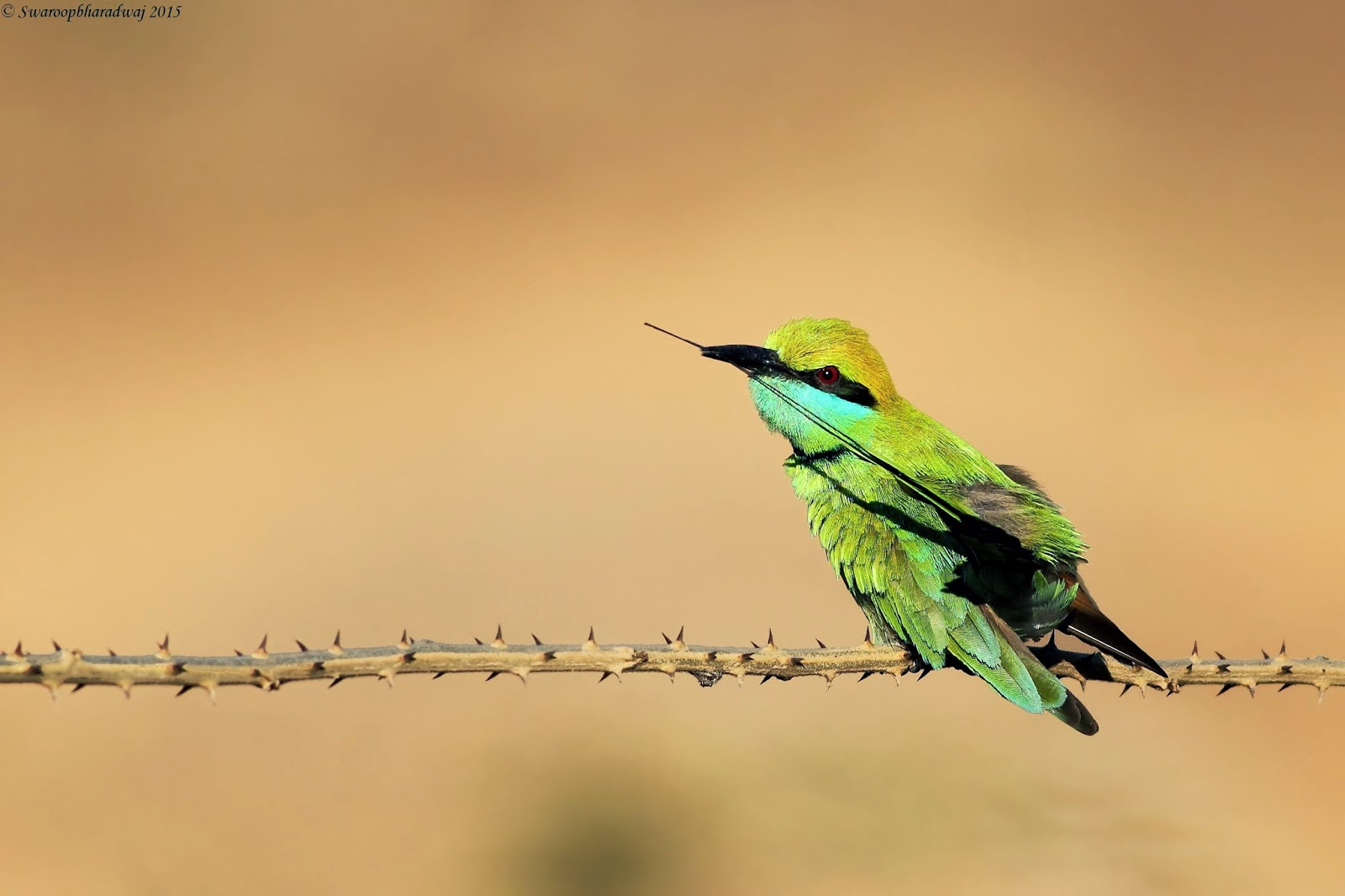
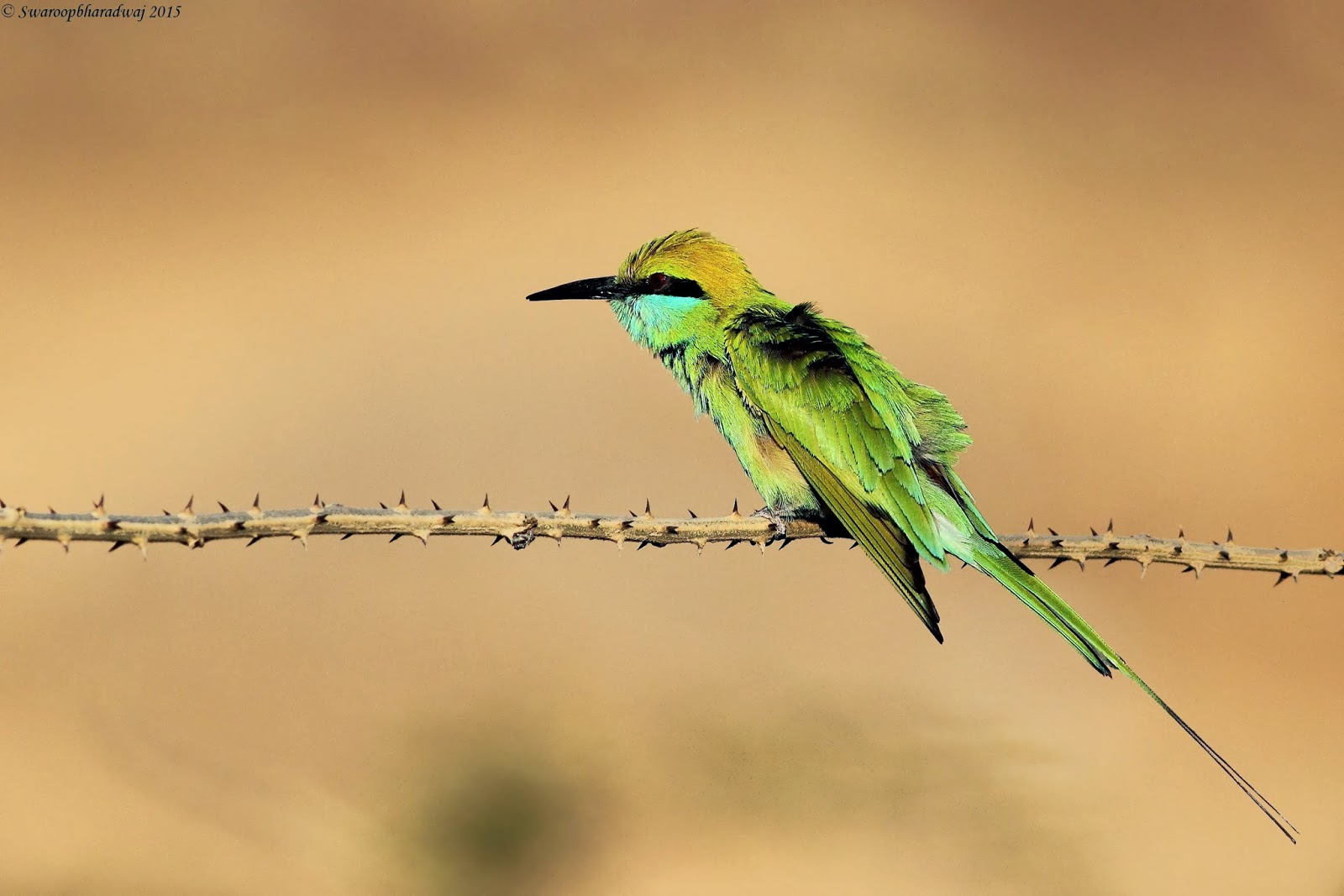
Green Bee Eater

The Riot of colors, bright green with tinted blue, the bird is rich colored and found in grasslands and thin scrub forest. They prey on insects, more upon flying insects. Green bee eaters hunt from a perch, repetitively flying and perching from the same perch. They are abundant have a wide geographic range. Breeds in open land and bushes. Before swallowing prey, a bee-eater removes stings and breaks the exoskeleton of the prey by repeatedly thrashing it on the perch.


They are seen in a small groups and roost in a large group (few hundreds), by hugging each other in a line on a branch. They are often found taking mud bath to clean feathers.


This fellow in image was preening to keep his feathers in top condition. Almost all birds have a this behavior called preening. Its your luck if you see birds while they are preening. They show up their feathers and the rich color for your joy!


Why do birds preen -


1. To keep parasites at bay from its body.
2. To remove dirt, twigs etc from feathers.
3. To align the feathers the way it should be (Dressing-up)
4. To spread wax like substance to water-proof them self.


Tuesday, 10 March 2015

Rosy Starling

The "rosy" as the name indicates the bird has pink plumage. They are native to central asia and eastern Europe. Migrates to India to winter. The are highly social bird and always be in group gathering to go for roosting or to migration. Thousands gather and form a bird cloud which looks like a folk of honey bees (for comparison to get visualization as I don not have a photo of them in group) travelling form a distance.

Quite noisy in their perch. They outnumber local starlings and mynas in india during winter when they migrate.

They are insectivorous and a natural way to control the farm pests as these birds prefer agricultural lands and other open areas. They are "without a second thought" farmer friend.


A small case study on rosy starlings (source Wikipedia) :

In Xinjiang, China, farmers used to use insecticide to eliminate locust, which is costly and polluting. In the 1980s, experts found that rosy starlings which fly to Xinjiang farms and feed on locusts could be used for control instead. The experts begin to build artificial nests to attract rosy starlings, an effort reported to be so successful that the number of locusts was insufficient to feed the birds, causing many juveniles die for hunger. By the 2000s many Xinjiang farms greatly decreased the usage of insecticide.


Think on why to use insecticides and pesticides when many like starlings are on job! They are pollution free and zero side effects....
Hoskote lake on 08.03.2015


Sunday, 8 March 2015

Barn swallow

Watching a bird doing areal acrobats, restless flying, maneuvering with high speeds to catch insects is a thrill. 

Barn swallows feed on insects, especially flies. They have a very wide range of distribution and are not threatened species, they depends on human beings and spread across the globe as human beings distributed across timeline.

Bran swallows construct solid nests made out of mud and other natural reinforcements on the man made structure.

They breed in northern hemisphere and winters in south. The winter migrants to India could be from the breeding grounds of china. They migrate in huge folks and can cover upto 11'000 KM. 

They contribute towards eco-balance since they feed on insects and control them. Bran swallows are the natural remedy for mosquitoes, as they feed on mosquitoes and keep deadly diseases at bay !! 

Wednesday, 4 March 2015

Black Winged Stilt

This is a long legged wader bird. If we see the ratio of its leg length to the size of the body, this is the bird having longest length relative to the body size. One of its kind.
Mostly feed on aquatic insects, makes appearance during mid Feb or March and leaves during mid of the year in hoskote lake.

Significance of waders: They are the prime transporters of the eggs of aquatic life, helps in distributing the aquatic species across the water bodies when they move from one place to another. Maintains ecological balance.